
Signs Your Water Heater Is Failing
Few appliances get taken for granted quite like the water heater. It works quietly in a closet, garage, or utility room, delivering hot water for showers, dishes, and laundry without ever asking for attention. Most Benbrook homeowners only start thinking about it the morning it stops working, usually mid shower. By then, a unit that had been showing warning signs for weeks or months has finally given out at the worst possible time.
The reality is that water heaters rarely fail without notice. They tend to send signals as they wear down, and learning to recognize those signals gives you the chance to plan ahead instead of scrambling during an emergency. Knowing how long a water heater is built to last, and what a struggling one looks like, can help you stay one step ahead of a cold, inconvenient surprise.
How Long a Water Heater Is Built to Last
A standard tank water heater is generally built to serve a home for somewhere in the range of eight to twelve years. Tankless units often last longer, sometimes well beyond fifteen years with proper care. These are averages rather than guarantees, and the actual lifespan of any given unit depends heavily on how it is used, how well it is maintained, and the quality of the water flowing through it.
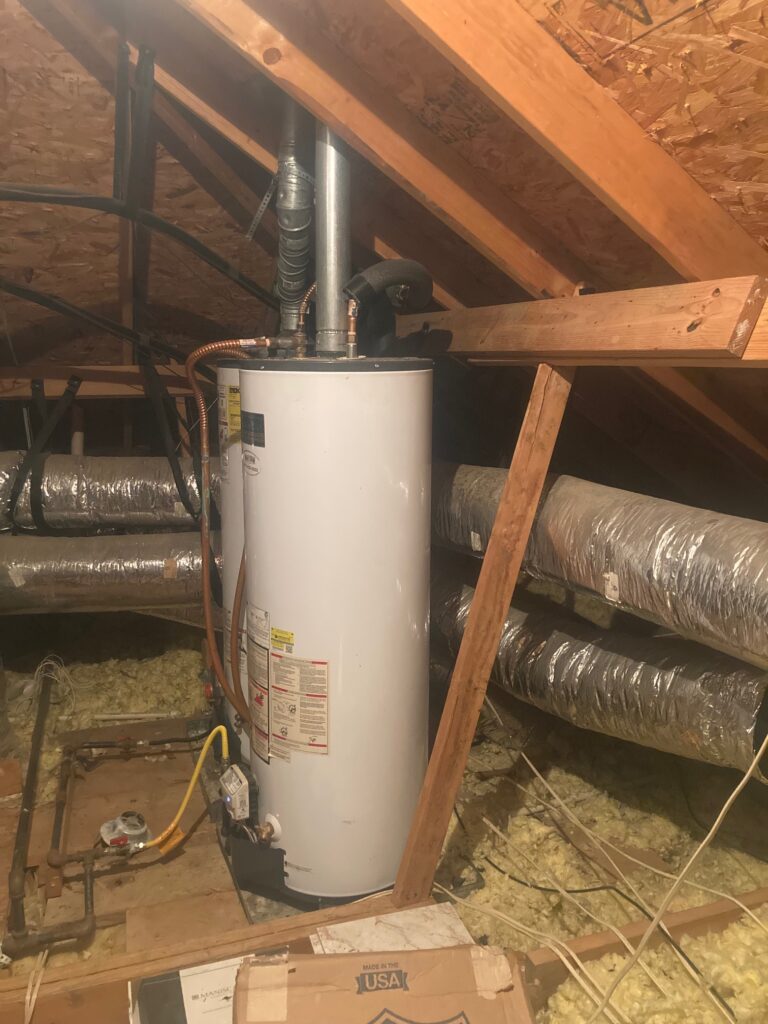
Maintenance plays a larger role than most homeowners expect. A water heater that is flushed regularly to remove buildup, and inspected from time to time, tends to reach the upper end of its expected life. A unit that is installed and then forgotten usually wears out sooner, because the conditions inside the tank quietly work against it year after year. Small habits early on can add years to the back end of a heater’s service life.
Water quality matters too, and that is especially relevant here. North Texas water is hard, meaning it carries a heavy load of dissolved minerals that settle inside the tank as sediment over time. That sediment makes the heater work harder and ages it faster, which is one reason water heaters in this region often need attention a little sooner than the averages suggest. Knowing roughly how old your unit is gives you an important baseline for judging the warning signs that follow.
Age and the Hidden Toll of Time
Age alone is one of the most reliable predictors of water heater trouble. If your unit is pushing past the ten year mark, it is wise to start watching it closely, even if it still seems to be working fine. The internal components wear gradually, and a heater that performs well one month can begin to struggle the next once it crosses into the back half of its life. If you are not sure how old yours is, the manufacture date is usually encoded in the serial number on the label.
The interior of a tank takes a steady beating over the years. Constant heating and cooling stresses the metal, minerals build up along the bottom, and a sacrificial part called the anode rod slowly corrodes away as it does its job of protecting the tank from rust. Once that protection is used up, the tank itself begins to corrode from the inside, and that internal rust is often the beginning of the end for the unit.
This is why two water heaters of the same age can be in very different shape. One that has been maintained and runs on softer water may have plenty of life left, while another that has gone years without service in hard water conditions may be on borrowed time. Understanding that the wear is happening continuously, even when the heater seems fine, helps explain why the warning signs in the next section deserve to be taken seriously the moment they appear.
The Warning Signs of a Failing Water Heater
The most obvious sign is a change in the hot water itself. If your showers turn lukewarm, the hot water runs out faster than it used to, or the temperature swings unpredictably, the heater is struggling to keep up. Sediment buildup, a failing heating element, or other internal wear can all reduce how much hot water a unit can reliably produce, and that drop in performance is often the first thing a household notices.
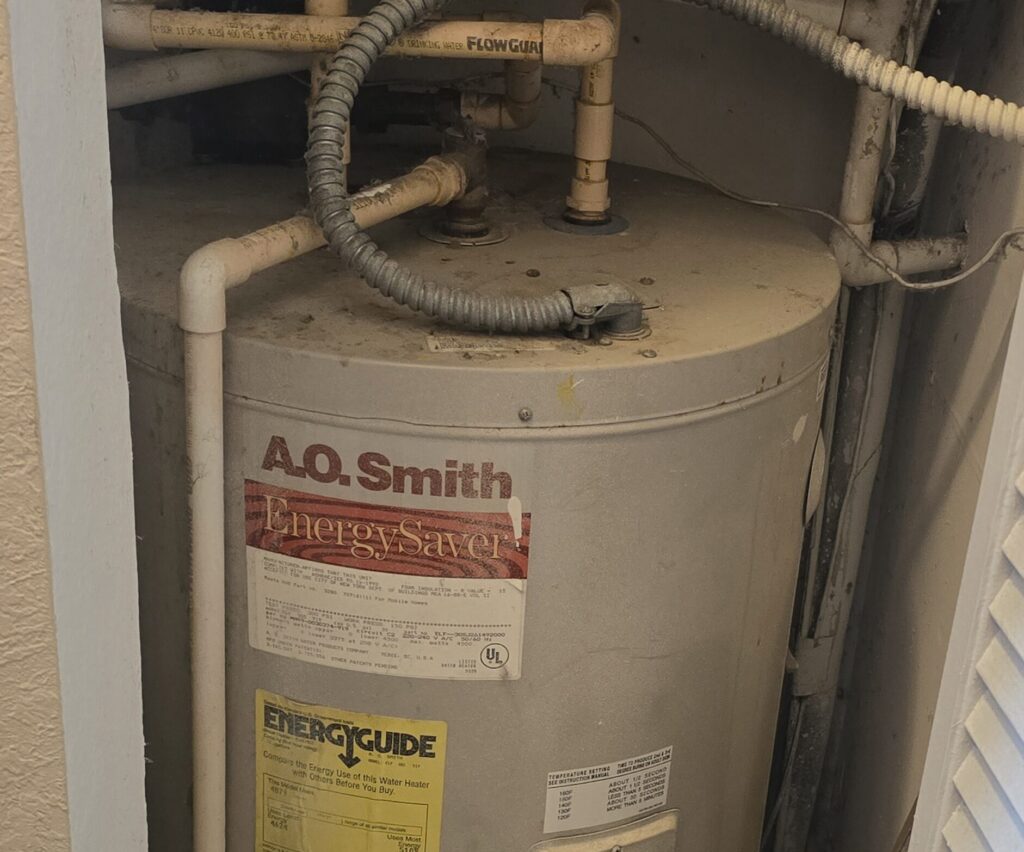
Pay attention to the water’s appearance and the sounds the unit makes. Rusty, brown, or metallic smelling hot water frequently points to corrosion inside the tank, a serious warning that the tank may be deteriorating. Rumbling, popping, or banging noises usually mean a thick layer of sediment has collected at the bottom, forcing the heater to work harder as water bubbles up through it. Neither symptom is something to brush off, since both reflect conditions that shorten the life of the unit.
The most urgent signs involve moisture. Any water pooling around the base of the heater, dampness on the tank, or visible rust on the exterior suggests the tank may be leaking or close to it. A tank that has begun to leak is generally near the end of its service life and cannot be repaired, only replaced. Spotting moisture early, before a slow seep becomes a sudden rupture, can save your home from water damage and give you time to plan the next step calmly.
What Happens If You Wait Too Long
The biggest risk of ignoring a failing water heater is a sudden tank failure. When a corroded tank finally gives way, it can release dozens of gallons of water all at once. If the heater sits in a garage with a floor drain, the mess may be manageable, but a unit in an interior closet or upstairs can flood floors, soak walls, and damage everything nearby in a matter of minutes. A failure like this almost always arrives without warning, which is exactly why the earlier signs are worth acting on.
Beyond the risk of a burst tank, a struggling heater simply becomes less reliable. It works harder and less efficiently as sediment and corrosion build up, and a unit straining at the end of its life is far more likely to quit unexpectedly. There is rarely a convenient time to lose hot water, and a heater that fails on its own schedule tends to do so on the coldest morning or the busiest day.
Waiting also narrows your options. A homeowner who notices the early signs has time to consider the right replacement, schedule the work, and avoid the pressure of an emergency. A homeowner who waits until the tank fails is left reacting to a flooded floor and a cold house at once. Planning ahead almost always leads to a smoother outcome than waiting for the unit to make the decision for you.
Repair, Replacement, and Maintenance
Not every water heater problem means the unit has to be replaced. A younger heater with an isolated issue, such as a faulty thermostat, a worn heating element, or a failed valve, can often be repaired and put back into reliable service. The key questions are the age of the unit and the nature of the problem. A relatively new heater is usually worth repairing, while an older one showing signs of internal corrosion is generally better replaced before it fails outright.
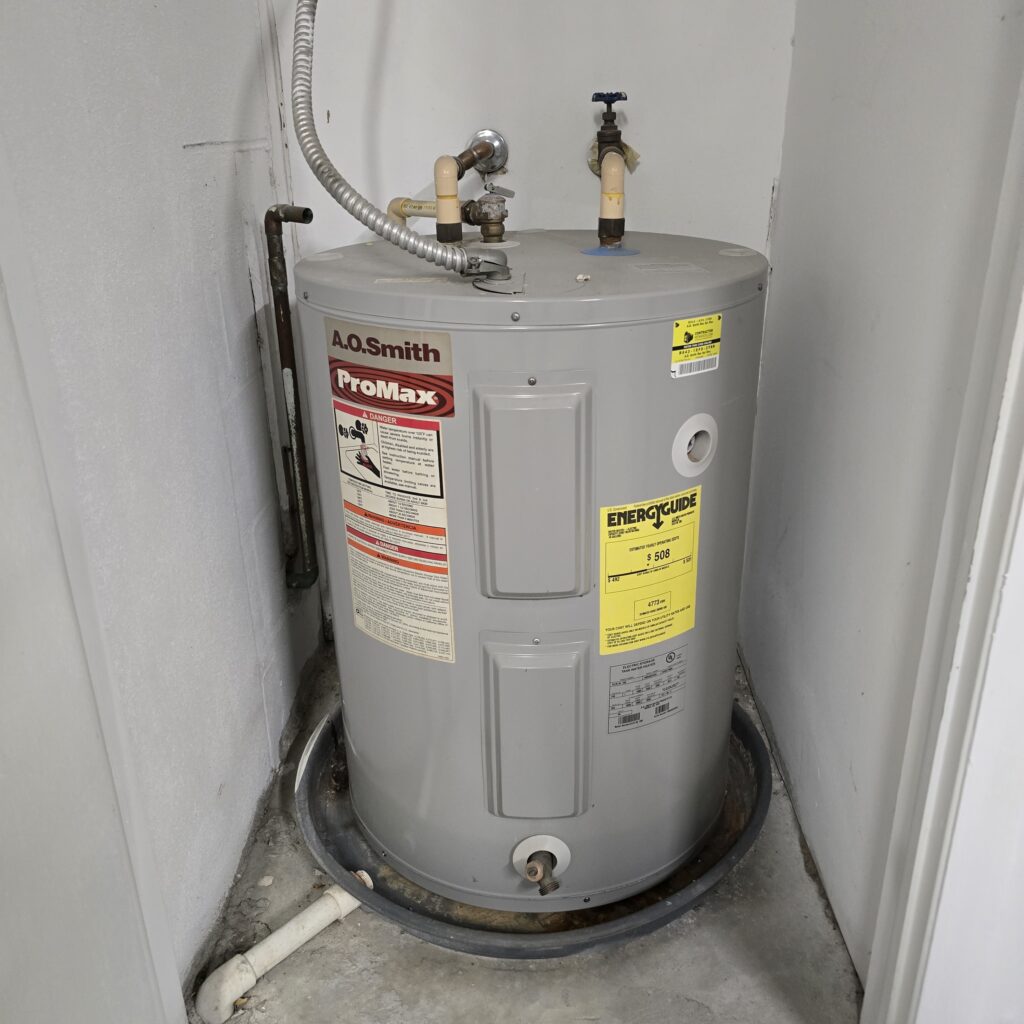
Maintenance can extend the life of whatever unit you have. Flushing a tank to clear out sediment, checking the anode rod, and descaling a tankless unit on schedule all help a heater run efficiently and reach its full lifespan. Because North Texas water is hard, this kind of routine care matters even more here than it might in regions with softer water. A heater that gets regular attention is far less likely to surprise you.
This is where a knowledgeable local team makes the difference. TD Plumbing Solutions has served Benbrook and the surrounding Fort Worth communities since 2005, and as a licensed Texas plumbing company under RMP45333, they handle water heater inspection, repair, installation, and tankless service as part of their core work. They are available around the clock when a heater fails unexpectedly, and they take the time to explain the condition of your unit so you can decide between repair and replacement with confidence rather than guesswork.
A water heater almost always tells you it is wearing out before it quits for good. Lukewarm showers, discolored or metallic water, rumbling noises, and moisture around the base are all the unit’s way of signaling that its time is running short. The homeowners who notice those signs, and keep an eye on the age of their heater, are the ones who get to replace it on their own terms instead of during a cold, soggy emergency.
If your hot water has been falling short or you have spotted any of these warning signs in your Benbrook home, it is worth having the unit looked at before it fails completely. The team at TD Plumbing Solutions can assess its condition, walk you through repair and replacement options in plain terms, and help you protect your home from water damage. Reach out today to schedule an evaluation with a trusted Benbrook plumber who treats every home like their own.